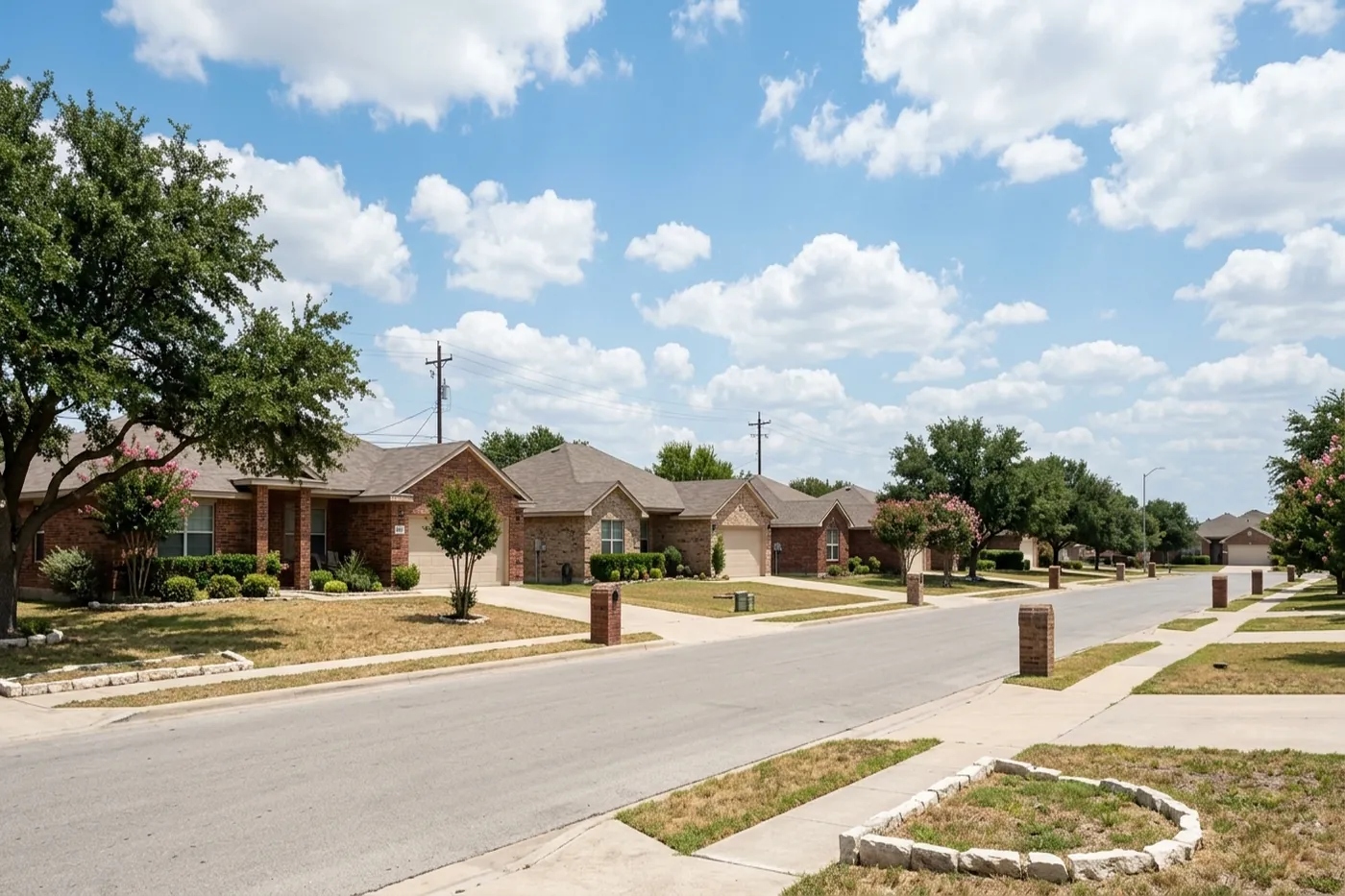
Commercial water softeners in Killeen run $3,000–$10,000 installed for most businesses, sized by daily grain load: gallons per day times the metro’s 8–10 grains per gallon of Belton Lake hardness. Duplex alternating systems keep water soft through regeneration for operations that can’t stop.
How commercial sizing actually works, what scale costs equipment, and where duplex systems earn their keep.
Hardness is a grain load, and yours is bigger
A household softener handles maybe 300 gallons a day; a restaurant dish line, a laundromat, or a salon floor can run ten times that. Multiply by the 8–10 grains per gallon that Bell County WCID No. 1’s treated Belton Lake water carries into every business in Killeen, Harker Heights, and Copperas Cove, and the daily grain load lands in the hundreds of thousands — the same water that spots a home shower glass is scaling your boiler, your ice machine jets, and your water heater elements at commercial speed. Sizing from that number — your actual gallons, this water’s actual grains — is the whole discipline of commercial softening, and it’s why residential units pressed into business duty regenerate constantly and die young.
What the metro’s water does to working equipment
| Equipment | What 8–10 grains does | What softening protects |
|---|---|---|
| Dishwashers & glasswashers | Spotting, fouled jets, detergent overuse | Clean racks at lower chemical dose |
| Ice machines | Scale on evaporator plates, cloudy ice | Clear ice, service intervals kept |
| Boilers & water heaters | Scale insulates elements — longer burns, early failures | Rated efficiency and element life |
| Laundry equipment | Gray linens, stiff towels, extra detergent | Whites that stay white per wash dollar |
| Coffee & espresso machines | Scale in boilers and group heads | Consistent extraction, fewer descales |
Most commercial kitchen-equipment warranties assume treated feed water — running an ice machine or combi oven on untreated 8–10 grain supply can move failures from their ledger to yours. The softener is usually cheaper than the first voided repair.
Duplex systems: soft water with no timeouts
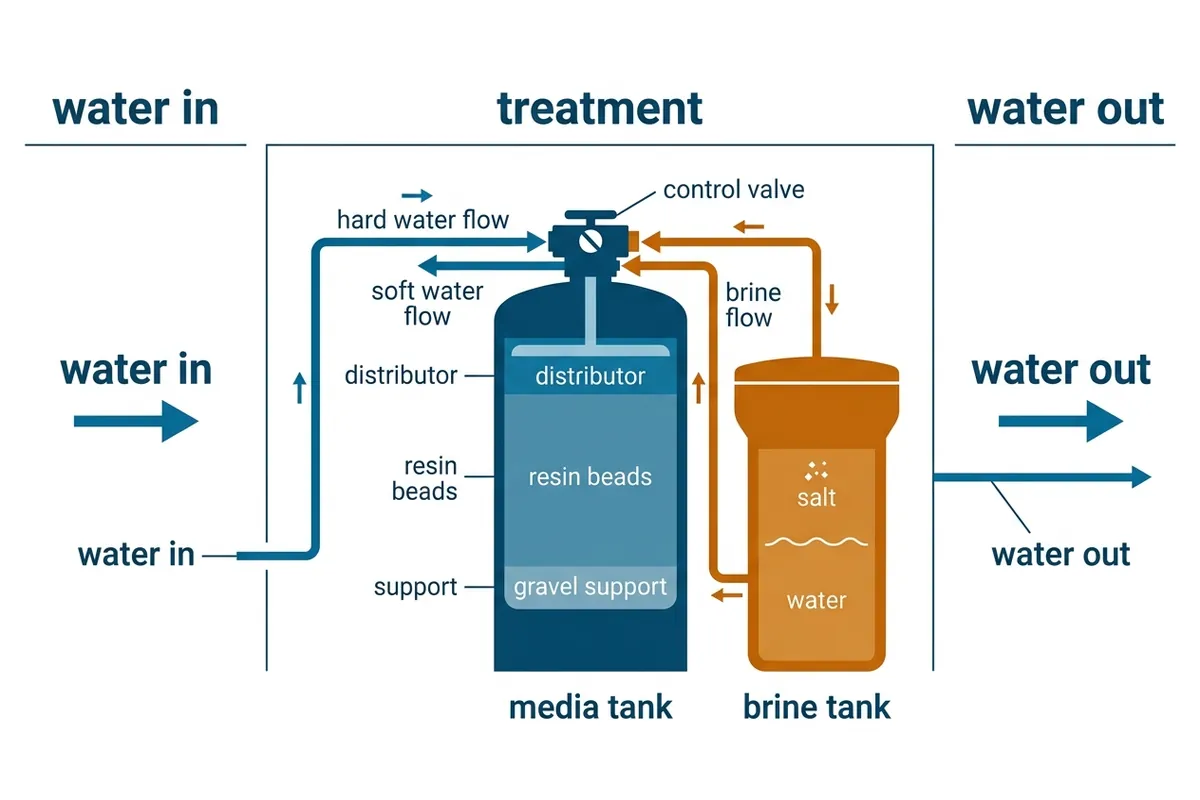
A single softener stops softening while it regenerates — fine at 2 a.m. in a house, not fine mid-lunch-rush on a dish line. Duplex alternating systems run two resin tanks with one always in service: when tank one exhausts its capacity, the valve swaps to tank two and regenerates the first behind the scenes. For the metro’s always-on operations — restaurants and hotels on the Fort Cavazos corridors, laundromats, salons booked through Saturday — that’s the difference between a softener and a soft-water guarantee. The same demand math that sizes the tanks also predicts your salt budget in pounds per month, so the quote reads like an operating plan instead of a sticker.
The install, from tap test to turn-on
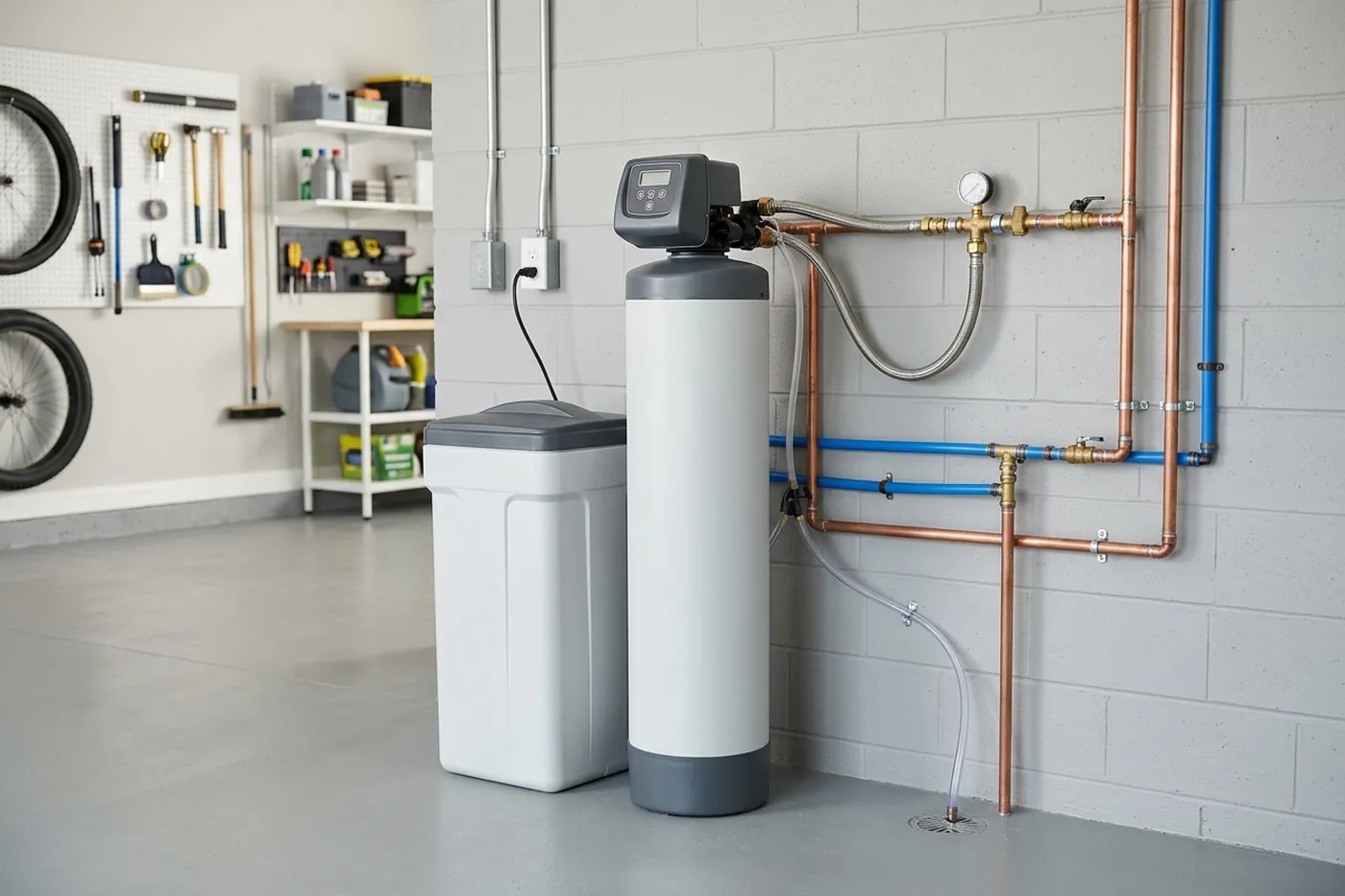
It starts with a hardness test at your own tap and a demand calculation from your water bills and busiest week — free, and worth having even if you stop there. The install itself plumbs the system at your meter side with a bypass, ties the drain per code, and commissions the valve on your actual numbers. Afterward, the same crew that handles softener repair keeps it running, our salt delivery keeps the brine tank full on schedule, and filtration or reverse osmosis can join the loop where taste or dissolved solids matter to the product. Residential sizing lives on the installation page; every number is in the cost guide.
Commercial softening questions, straight answers
Why do Killeen businesses need commercial-grade softening?
Because hardness scales with volume. The metro's 8-10 grain Belton Lake water is a comfort issue at household volumes — at a restaurant, laundromat, or salon running thousands of gallons a day, it's a daily grain load in the hundreds of thousands, scaling boilers, dishwashers, and ice machines. Residential units regenerate too often at that duty and fail early.
What does hard water actually cost commercial equipment?
Scale is an insulator and a clog. On heating elements it forces longer run times and earlier element failures; in ice machines and dishwashers it fouls jets and leaves the spotting that shows on glassware; in boilers it builds on heat-exchange surfaces. Most commercial kitchen-equipment warranties also expect treated feed water — untreated 8-10 grain supply can put repairs on your side of the ledger.
What size softener does a business need?
Whatever the math says. Sizing starts with your water bill and your busiest week: gallons per day times 8-10 grains gives the daily grain load, and the system is sized so regeneration happens on schedule, not mid-service. For businesses that can't stop — restaurants, laundries, lodging near Fort Cavazos — a duplex alternating system keeps one tank in service while the other regenerates.
Do Harker Heights and Copperas Cove businesses have the same water?
Effectively yes. Bell County WCID No. 1 treats Belton Lake water and wholesales it to Killeen, Fort Cavazos, Harker Heights, Copperas Cove, and neighboring systems — Harker Heights' 2024 report shows 140 ppm and Copperas Cove's 174 ppm from that shared supply. One hardness reality across the metro means one sizing method works everywhere we install.
What does a commercial water softener cost in Killeen?
Most commercial installations land in the $3,000-$10,000 range — capacity, duplex versus single tank, and plumbing complexity set the number, and heavy-duty applications can run beyond it. The site visit that produces the quote includes a hardness test at your tap and a demand calculation from your actual water use, both free.
Get a free Killeen estimate
Tell us what you're seeing at your fixtures and we'll recommend a system sized to your home. We reply the same business day.