
Salt-free conditioners in Killeen run $1,200–$3,500 installed; scheduled salt delivery keeps conventional softeners fed without the hauling. On the metro's 8–10 grain Belton Lake water, both are legitimate answers: to two different questions.
What conditioners honestly do and don't, who each option fits, and how delivery works.
The honest difference, stated plainly
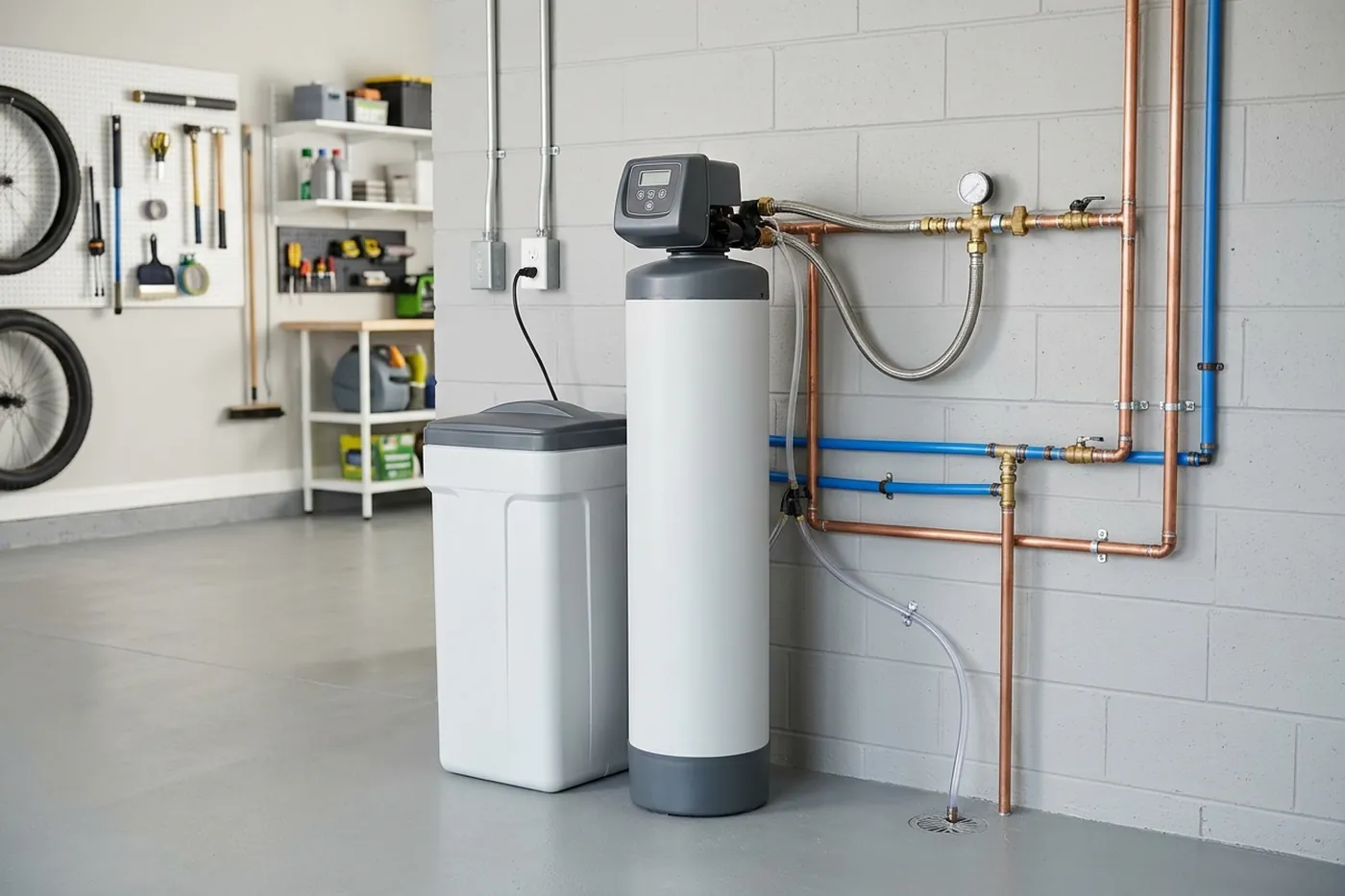
A salt-based softener removes hardness minerals; a salt-free conditioner changes how they behave, so scale sticks far less to water heaters and fixtures. On Killeen's moderate hardness that protection is real (this is the range conditioners handle best) but soap still lathers like hard water and glasses still spot. Sellers who blur that line sell disappointment. Both have a place because different houses want different things, and a good quote names which problem each one solves.
Which houses choose which
| Situation | Better fit | Why |
|---|---|---|
| Water-heater protection, zero maintenance | Salt-free | No salt, no drain, no regeneration |
| Spots, soap, laundry complaints | Salt-based | Only removal changes how water behaves |
| Sodium-restricted household | Salt-free | Nothing added to the water |
| Rental property, hands-off owner | Either + delivery | Delivery keeps it running between tenants |
| Full fix, willing to add salt | Salt-based | The complete answer on hard water |
Conditioner or full water softener installation?
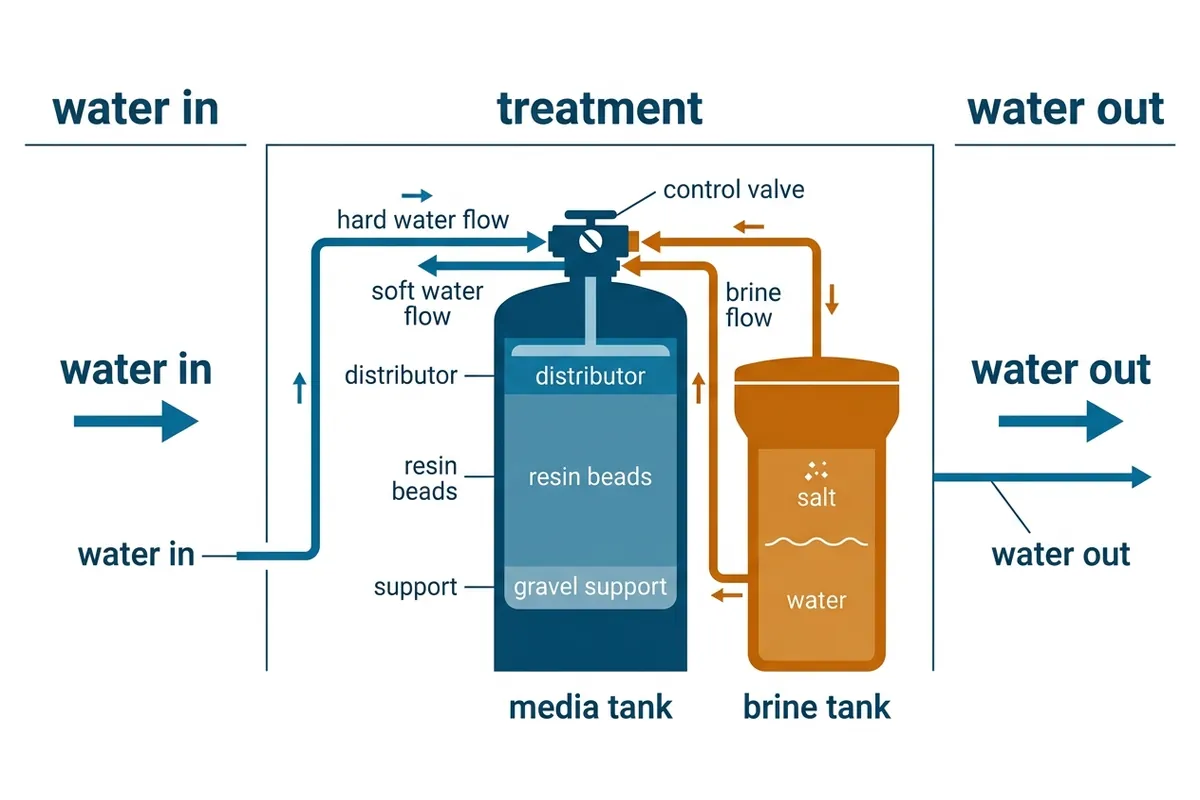
The decision usually resolves in one question: do you want the scale protection, or the whole soft-water result? A conditioner is the lighter footprint (no drain, no salt, no regeneration cycles) and on the metro's 8–10 grain water it meaningfully extends water-heater life. A full water softener installation is the complete answer: lather, laundry, spotless glass, and scale, all handled. Price gaps are honest (conditioners $1,200–$3,500, softeners $1,500–$4,500) so the choice is about the result you want, not the budget tier you're steered to. The tap test and a ten-minute conversation settle it, and the quote prices whichever you choose without a bait-and-switch.
Salt delivery, for the homes that soften
Correctly programmed softeners on this water refill every six to ten weeks, and the bags weigh forty pounds each, and it's a hundred degrees out. A good delivery service works on a schedule matched to your usage: the driver delivers, fills, breaks up any bridging, glances over the system, and leaves. Landlords and PCS-season absentee owners use it to keep equipment fed between tenants; everyone else uses it to never think about salt again. Pairs naturally with annual service, and new installations can start on a delivery schedule from day one.
Frequently asked questions
Do salt-free conditioners actually work?
They reduce scale adhesion (genuinely useful on 8-10 grain water) but they don't remove hardness minerals, so soap behavior and spotting persist. A good specialist explains the difference honestly rather than pretending one does the other's job.
When is salt-free the right call here?
Homes that mainly want water-heater protection without salt bags, drains, or maintenance, and households under sodium restrictions. Killeen's moderate hardness is exactly the range where conditioners perform their best.
How does salt delivery work?
A good delivery service fills on a schedule matched to your usage, every six to ten weeks for most homes on this water, checks the system while there, and skips visits when the tank doesn't need one. No hauling 40-pound bags through a Texas summer.
What does delivery cost?
Salt plus a modest delivery fee, scheduled so nothing runs out. Most customers spend less than they expect because correctly programmed softeners on 8-10 grain water simply don't eat much salt.
Get a Killeen estimate
Tell us what you're seeing at your fixtures, and the local specialist who calls back can recommend a system sized to your home. A local specialist who serves Killeen will call you back.